A 40% reduction in desks does not mean a 40% reduction in office space and rent.
The appeal of a hybrid workplace is easy to understand: give employees more flexibility, share desks, and reduce the amount of office space you lease.
But the financial argument often skips an important step. An office is more than a collection of desks. Meeting rooms, support areas, circulation, technology, and the way teams work all affect the result.
For this article, I’m focusing on a hybrid model that uses shared or unassigned desks to reduce the office footprint. Flexible hours alone do not require that kind of change.
Before committing to a smaller office or a long-term lease, here are five reasons to test the savings rather than assume them.
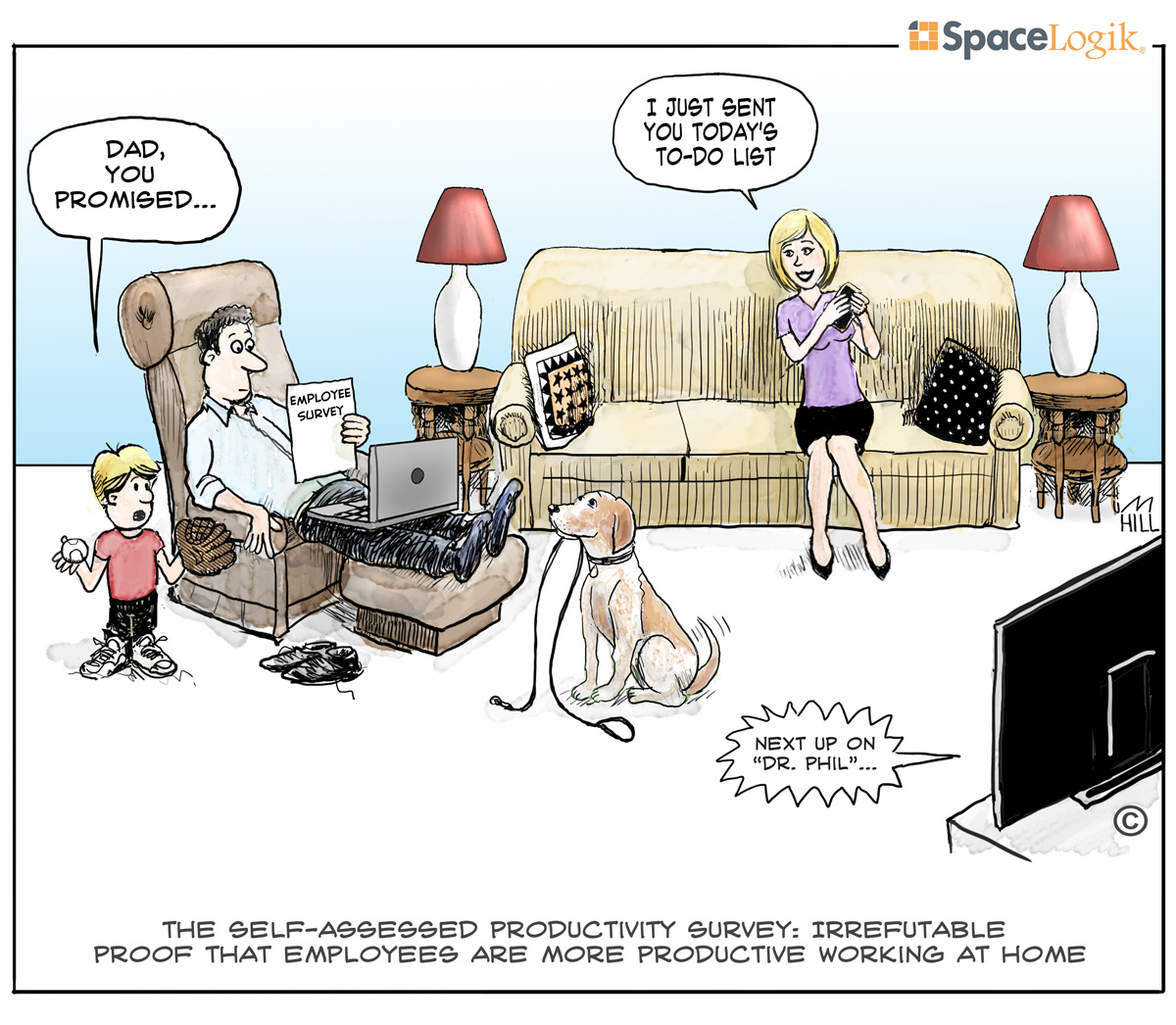
1. Productivity needs more than a survey.
Asking employees whether they feel more productive can be useful. It is not a complete business case for changing your workplace.
Look at outcomes that matter to your company: quality of work, client responsiveness, sales, project delivery, onboarding, and retention. Evaluate them by role and team, rather than assuming one arrangement works equally well for everyone.
Also consider what your measurements leave out. Mentoring, knowledge sharing, collaboration, and company culture may not appear in a simple output count, but they belong in the decision.
A short trial can inform your strategy. It should not be treated as conclusive evidence for an arrangement you may have to live with throughout a multiyear lease.
2. Choose a workplace that serves your business.
A workplace strategy should start with how your company works—not with a target percentage of desks to remove.
If your teams need regular collaboration, the office should support those interactions. If employees come in primarily for meetings or client sessions, reducing individual workstations may increase the importance of meeting and breakout space.
Shared seating also needs a practical plan. Will people be able to sit near their teams? Will they have somewhere to store materials? Can the office accommodate the days when attendance is highest?
The right question is not simply “How many desks can we eliminate?” It is “What workplace helps our people perform—and what does that workplace actually cost?”
3. Weigh immediate savings against long-term effects.
I think of a company as a team and its workplace as part of the team’s practice environment. Experienced people help newer colleagues learn, develop judgment, and understand how the organization works.
That does not mean every task requires everyone to be in the office every day. It means a workplace decision should deliberately account for how those interactions will happen.
The rent savings may be visible immediately. The effects on mentoring, coordination, employee experience, and client service may take longer to understand.
Define what success looks like, track it over time, and leave room to adjust. A lower real estate bill is valuable, but it is only one part of the company’s overall performance.
4. Fewer seats do not mean an equal reduction in space.
Here is the part I like most: the math.
Imagine reducing an office from 200 seats to a target of 120 seats—a 40% reduction. It is tempting to assume the lease cost will fall by the same percentage.
But conference rooms, reception, storage, IT space, and other support areas do not necessarily shrink at the same rate. An office designed for concentrated meeting days may still need substantial collaboration space.
In the illustrative space comparison from our original article, the projected office requirement fell from 31,900 to 25,700 rentable square feet (RSF).
| Measure | Result |
|---|---|
| Original projected office size | 31,900 RSF |
| Hybrid projected office size | 25,700 RSF |
| Space reduction | 6,200 RSF |
| Reduction in projected space | 19.4% |
| Assumed annual gross rent | $55 per RSF |
| Illustrative annual rent savings | $341,000 |
This is a worked example from the original article, not a typical or guaranteed result. The rent assumption is illustrative, not a current market quote. Actual space and savings depend on your program, building, and lease terms.
The lesson is straightforward: the space reduction in this example is approximately 19.4%, even though the target seat reduction is 40%.
Put the savings in business context.
Assume the company still employs 200 people at an annual salary-and-benefits cost of $125,000 each. That is $25 million a year in employee costs. The $341,000 rent savings equal about 1.36% of that amount.
This is a comparison of cost scales—not proof that a 1.36% productivity change would have an equal dollar impact. Productivity, revenue, and employee cost are not interchangeable. It does show why the business consequences deserve as much attention as the rent savings.
5. Transition costs can change the answer.
The gross rent reduction is a starting point. To understand the net benefit, account for what it costs to create and operate the new workplace.
- Technology and support: equipment, meeting-room technology, remote access, and IT support.
- Connectivity and software: collaboration subscriptions, desk booking, and any additional services.
- Furniture and storage: lockers, shared workstations, seating, and home-office equipment where applicable.
- Construction and relocation: reconfiguration, moving costs, and the capital required to make the new space work.
For example, assume a build-out cost of $100 per RSF for the 25,700-RSF office. That is $2.57 million. Spread evenly over ten years, it represents $257,000 a year before financing costs.
Subtract that from the illustrative $341,000 annual rent savings and $84,000 remains—before the other costs above.
The $100-per-RSF figure is a scenario assumption from the original article, not a current construction estimate. This simple allocation is not a full cash-flow analysis: landlord allowances, financing, lease timing, and costs under the alternative workplace scenario also need to be compared.
Before your next lease, model the whole workplace.
Flexibility may be an important part of your employee strategy. The point is to understand its operational and financial implications before translating it into a long-term real estate commitment.
Separate the work policy from the space program. Test headcount, attendance patterns, collaboration needs, support areas, building efficiency, and construction costs together.
That is where SpaceLogik can help. Its workplace strategy and patented space optimization tools let you explore space programs, compare buildings and costs, and evaluate current efficiency alongside future space needs.
Whether the change comes from hybrid work, AI, growth, or a different business model, start with a question you can test: What space will our people actually need, and what will the full decision cost?
Adapted from SpaceLogik’s original “5 Reasons Why the Hybrid Workplace Doesn’t Add Up.” This draft retains the five-part argument while updating the framing and recalculating the illustrative figures.


